Repair or Replace: A Field-Driven Look at Failure Indicators for Secondary Containment Liners
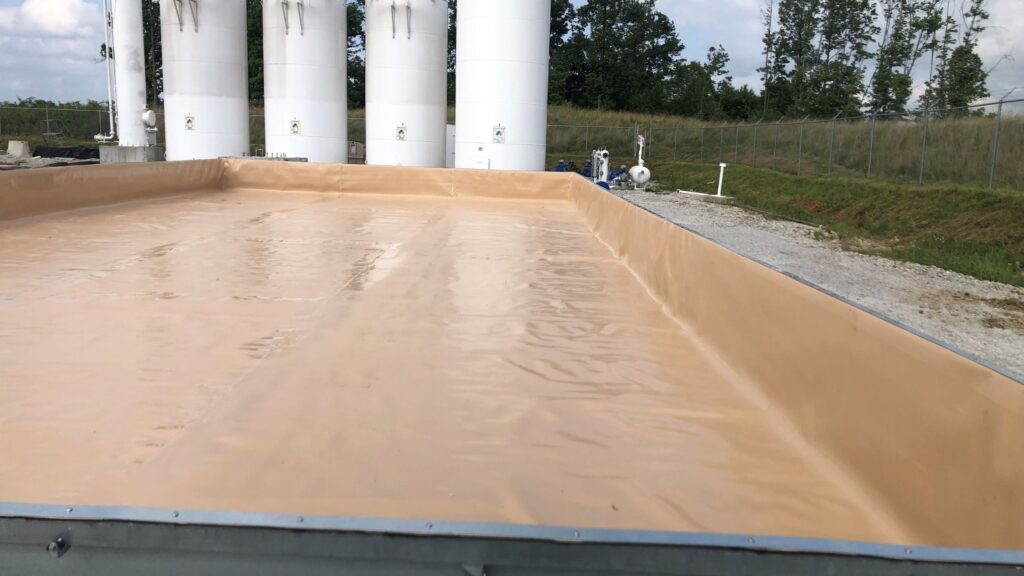
Secondary containment liners are the first line of protection against fluid migration across upstream and midstream operations. When damage appears, the question becomes whether the issue can be repaired or if the liner has reached the end of its service life. Understanding the failure patterns that field teams encounter helps operators make informed decisions that protect productivity, budgets, and environmental compliance.
Table of Contents
What Secondary Containment Liners Protect Against
A well-designed containment system creates a controlled barrier that prevents produced water, hydrocarbons, and corrosive elements from reaching soil or equipment foundations. When maintained properly, secondary containment liners support operational reliability and regulatory expectations.
They also help reduce spill response time, limit the scale of remediation efforts, and support long-term asset integrity across wellsites, terminals, and processing locations.
Which Types of Damage Are Usually Repairable
Some forms of liner damage are localized and predictable. These issues can often be addressed through structured repair methods without interrupting site operations.
- Isolated punctures: Small holes caused by dropped tools or rock intrusion. Repairs typically involve patching compatible with the original liner material.
- Localized abrasion: Wear generated by foot traffic, hoses, or temporary equipment. If abrasion has not penetrated the full thickness, surface preparation and patch reinforcement can restore integrity.
- Minor seam scuffs: Superficial seam wear where adhesion remains intact. Although minor, seam work should always be evaluated for moisture presence before repair.
- Light chemical staining: Short-term contact with produced fluids may leave visible marks, but does not always indicate structural loss. Surface cleaning and recoating may be sufficient.
When repairable conditions are identified early, operators gain more service hours from their containment systems and avoid unnecessary downtime.
When Damage Signals End of Life Instead of Repair
Other conditions indicate a system that can no longer perform as designed. These failures develop through mechanical stress, thermal cycles, aging, or subgrade instability. Once present, they undermine the dependability of secondary containment liners and elevate environmental risk.
- Widespread cracking or brittleness: If the liner no longer flexes under load, its mechanical strength is compromised.
- Loss of adhesion or uplift: Sections that balloon or detach may indicate fluid migration beneath the liner surface. This condition cannot be corrected through surface patching.
- Recurring failures in the same area: Repeated damage near tank bases, sump boxes, or traffic paths often suggests deeper structural movement or poor site preparation.
- Evidence of fluid under the liner: Any sign of trapped hydrocarbons or produced water beneath the membrane is treated as a containment failure.
How Field Teams Decide Between Repair and Replacement
A field assessment looks beyond visible damage. Inspectors consider the age of the liner, production history at the location, weather exposure, chemical compatibility, and subgrade condition.
The evaluation process often includes:
- Measurement of the affected surface area
- Review of recent site changes or equipment moves
- Inspection for signs of uplift or delamination
- Confirmation that any repair would still meet regulatory requirements
By applying these criteria, teams avoid temporary fixes that fail under pressure and ensure that containment systems remain dependable during high activity cycles.
How Timely Replacement Reduces Risk and Cost
Once a liner reaches the end of its useful life, replacement provides measurable value.
A new system helps operators:
- Reduce the likelihood of soil contamination and long-term remediation
- Maintain compliance during inspections and audits
- Protect concrete pads, tank bases, and steel structures from corrosion
- Improve environmental safety ratings and incident reporting metrics
Many operators choose to upgrade to presprayed polyurea or thicker geomembrane systems during replacement to improve future reliability. These enhanced materials help extend the lifespan of secondary containment liners and reduce overall maintenance cycles.
Frequently Asked Questions
- How often should liners be inspected? Most operators perform routine inspections, with follow-up checks after storms, large equipment moves, or spill events.
- Can older liners still be repaired? Possibly, but age, exposure, and substrate condition must be reviewed. Patchable damage on an aging liner may indicate a broader lifecycle issue.
- What information supports a repair or replacement recommendation? Photos, liner type, installation date, subgrade details, spill history, and specific damage locations all help field teams determine the correct approach.
Protecting Sites With Better Liner Decisions
AssetGuard and Falcon Technologies provide inspection, repair, and replacement products and services for secondary containment liners across upstream and midstream facilities. If your team needs a clear recommendation based on field-verified criteria, our specialists can support your next step.