

Catch Basins and the Hidden Step in Pipeline Pigging: Where Does the Waste Actually Go?
Pipeline pigging gets plenty of attention for what it accomplishes inside the line. A pig scrapes away buildup, clears liquids, and helps operators confirm a pipeline is sound. What gets discussed far less often is what happens at the receiving end, when everything that pig has been pushing finally exits the pipe. That sludge, scale, water, and product has to land somewhere, and how a crew captures it is one of the most overlooked parts of the entire operation.
As pigging activity climbs across the oil and gas sector, that overlooked step is becoming harder to ignore. This is where catch basins earn their place on the jobsite.
Table of Contents
Why Is Pigging Volume Rising?
Pipeline maintenance is not slowing down. The global pigging services market was valued at roughly $5.79 billion in 2024 and is projected to grow steadily through the next decade, driven by aging pipeline networks and tighter integrity requirements. A big part of that pressure comes from regulators. The number of penalties issued for pipeline safety violations rose about 20 percent between 2022 and 2024, and operators are now expected to inspect and maintain their lines on a regular schedule or face the consequences.
At the same time, money is flowing back into the upstream side of the business. Global capital spending on upstream oil and gas activity was projected to top $520 billion in 2025, roughly a 10 percent jump over the prior year. More exploration means more new pipelines, and more pipelines mean more pigging over their operating life.
Put those trends together, and the takeaway is simple. There are more pigging operations happening, they are happening more often, and each one produces waste that has to be contained properly.
The Step Everyone Plans Around the Pig, Not the Waste
Crews put real thought into pig selection, launch pressure, and run timing. The capture of what comes out the other end often gets far less planning. In practice, that waste is sometimes directed into whatever is on hand: an open pit, a makeshift berm, or a temporary liner that was not built for the job.
The problem is that pigging waste is rarely clean. It can carry hydrocarbons, paraffins, heavy scale, and chemically aggressive fluids. When that material hits the ground, the consequences stack up quickly:
- Soil and groundwater contamination that triggers expensive remediation
- Regulatory exposure at a time when enforcement is tightening
- Lost product that could have been recovered
- Slow, messy cleanup that extends downtime on the line
A spill at the receiving end can undo the value of an otherwise clean, well-run pigging operation. The fix is not complicated. It is having the right vessel staged and ready before the pig ever launches.
What Do Good Catch Basins Need to Do?
Not every container is suited to capturing pigging waste. The fluids are harsh, the volumes can be significant, and jobsites are rarely forgiving. Catch basins built for this work have to check several boxes:
- Chemically resistant. The lining has to withstand hydrocarbons and industrial fluids without breaking down.
- Genuinely leakproof. A seam that weeps under load defeats the entire purpose.
- Portable. Pigging happens wherever the pipe is, so the basin has to travel and set up where it is needed.
- Low profile. Receiving points are often tucked under pipe and equipment, so height matters.
- Easy to empty and reuse. Vacuum truck access and simple cleanout keep the operation moving.
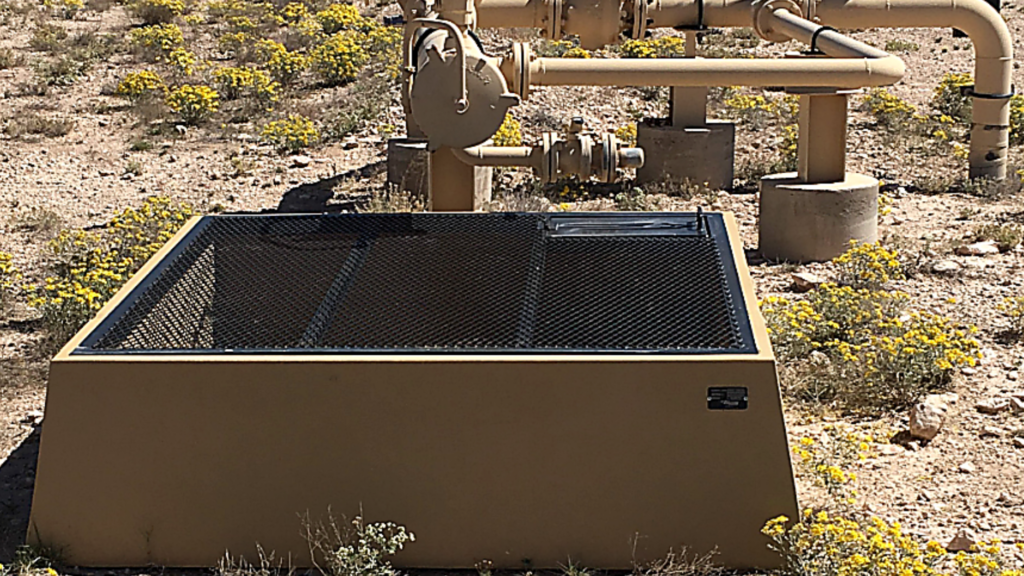
This is exactly the gap the WasteGuard portable multipurpose catch basin was designed to fill. It is built with a proprietary modified polyurea coating that creates a seamless, impermeable, chemically inert layer, so it stays leakproof even against most industrial chemicals and fluids. The standard unit holds 280 gallons within a compact 5-by-5-foot footprint and an 18-inch interior depth, and its low height lets it slide under pipes and equipment where taller vessels will not fit. A reinforced metal grating keeps debris and animals out while still allowing a vacuum hose in for cleanout, and because nothing sticks to the lining, the basin cleans up fast and goes back into service.
A Small Piece of the Job That Protects the Whole Operation
Pigging is a maintenance step meant to protect a pipeline and keep an operator compliant. It makes little sense to carry out that work and then create a fresh environmental liability at the receiving end. As pigging frequency rises alongside enforcement and upstream investment, the operators who plan for waste capture, not just the pig run, are the ones who avoid the cleanup, the fines, and the downtime.
A staged, purpose-built catch basin turns the riskiest moment of a pigging job into a routine one. That is a small change in planning with an outsized payoff.
Plan Your Capture Before the Next Run
If pigging or pipe draining is part of your maintenance program, the time to solve for waste capture is before the next operation, not during it. AssetGuard can help you match the right WasteGuard configuration to your site, including custom sizes for higher-volume work. Contact us today to get started.