Why Field Execution Determines Your Secondary Containment Solution's Performance
TL;DR
A containment solution is only as effective as its installation. AssetGuard products are engineered for maximum performance, but realizing that performance in the field requires expert installation sequencing, proper site preparation, and adherence to safety protocols. Falcon Technologies delivers that expertise, transforming high-quality products into fully functional, long-term containment systems.
Why Installation Quality Defines Containment Performance
When facilities evaluate a containment solution, most of the conversation centers on the product itself: material specifications, load ratings, chemical resistance, and regulatory compliance. Those factors matter. But there is a variable that determines whether a well-engineered product performs as designed in the real world, and it has nothing to do with the product itself. It is the installation.
Table of Contents
Field execution is where engineering intent meets site reality. Gaps in installation quality, shortcuts in site preparation, or improper sequencing do not just slow a project down; they can also compromise safety and quality. They degrade system performance over time, create liability exposure, and can compromise the containment integrity that the product was designed to provide.
AssetGuard products are built to perform. Falcon Technologies ensures they do.
Site Conditions: The First Variable That Changes Everything
No two job sites are identical. Subsurface conditions, drainage patterns, ambient temperature, existing infrastructure, and access constraints all shape how an installation should be approached. A containment solution that is perfectly suited for one environment can underperform in another if site-specific variables are not assessed and addressed before work begins.
Falcon Technologies conducts thorough pre-installation site evaluations that examine:
- Substrate integrity. Weak, uneven, or contaminated substrates create stress points that undermine sealing performance and structural stability over time. Proper substrate preparation, including cleaning, leveling, and repair, is a non-negotiable foundation.
- Drainage and slope. Containment systems depend on predictable fluid management. Incorrect slope or compromised drainage can create pooling, accelerate material degradation, and result in overflow during high-volume events.
- Environmental exposure. UV intensity, temperature cycling, chemical exposure, and humidity all affect material performance. Falcon Technologies evaluates these conditions to confirm that installation methods, sealant choices, and joint treatments align with what the system will actually face in service.
- Access and workflow constraints. Tight clearances, active operations nearby, and utilities in conflict with the installation path all require sequencing decisions that can only be made by an experienced crew in the field. Getting these wrong adds costs and rework. Getting them right protects the timeline and the system.
Sequencing: Why the Order of Operations Matters
Containment system installation is not a simple linear process. Each phase creates the conditions for the next, and a mistake in early sequencing compounds through every stage that follows.
Falcon Technologies applies a structured installation sequence developed and refined across hundreds of projects:
Phase 1: Site preparation and layout verification. Before any product is placed, the site is confirmed against design drawings. Dimensions are verified. Penetrations are located. Utility conflicts are resolved. This step prevents the most expensive mistakes: those that are discovered only after work is underway.
Phase 2: Substrate treatment. Depending on conditions identified during site assessment, substrate work may include mechanical profiling, chemical cleaning, crack repair, or primer application. Proper substrate treatment is the single greatest predictor of long-term bond integrity between the containment system and the surface it protects.
Phase 3: Component placement and anchoring. AssetGuard product components are placed in the sequence specified for the system configuration, with attention to alignment tolerances, anchor placement, and load distribution. Improper anchoring is a leading cause of containment failure during high-stress events.
Phase 4: Sealing and joint treatment. Joints, penetrations, and transitions are among the highest-risk points in any containment solution. Falcon Technologies uses manufacturer-specified sealants and methods, applied in controlled conditions, to ensure these critical transitions perform as designed.
Phase 5: System verification and documentation. Before handoff, Falcon Technologies conducts a thorough inspection against acceptance criteria, documents the installation with field records and photographs, and provides the facility with the documentation needed to support compliance reporting and future maintenance.
Safety Protocols That Protect People and the System
Field safety during containment system installation is not separate from quality. They are the same discipline. A crew that operates safely is a crew that is methodical, aware of its environment, and attentive to detail. Those same characteristics produce higher-quality installations.
Falcon Technologies operates under a comprehensive safety program that governs every project:
- Hazardous material handling. Many containment installations involve proximity to stored chemicals, fuels, or industrial process materials. Falcon Technologies crews are trained in hazard identification, appropriate PPE selection, and emergency response procedures for the environments where AssetGuard systems are deployed.
- Confined space and elevated work protocols. Secondary containment installations frequently involve below-grade sumps, pits, and vaults. Falcon Technologies maintains current confined space entry certifications and follows OSHA-compliant atmospheric monitoring and attendant protocols on every applicable project.
- Product-specific application safety. Many containment sealants, coatings, and liner materials have specific handling requirements related to ventilation, ignition sources, and skin and eye exposure. Falcon Technologies crews are trained on product-specific SDS requirements and apply those protocols consistently, not selectively.
- Site coordination with facility operations. Active industrial and commercial facilities cannot always shut down for a containment installation. Falcon Technologies works directly with facility safety teams to establish work boundaries, hot work permit requirements, and operational interfaces that protect both installation crews and facility personnel.
How Proper Installation Protects Long-Term Performance
The performance lifespan of a containment solution is established during installation, not after. Decisions made in the field determine how the system will respond to stress events years from now.
A properly installed AssetGuard system delivers:
- Maintained containment integrity under load. Correct anchoring and substrate preparation distribute stress across the system as designed. Improperly installed systems concentrate stress at vulnerable points, leading to premature cracking, joint failure, or displacement under load.
- Predictable maintenance intervals. Systems installed to specification behave predictably over time. Facilities can plan inspection and maintenance cycles with confidence. Systems with installation deficiencies tend to require reactive, unplanned maintenance, which is always more expensive and often more disruptive.
- Regulatory defensibility. Compliance with environmental containment regulations depends not just on having the right product, but on demonstrating that it was installed correctly and properly maintained. Falcon Technologies provides the installation documentation that supports that demonstration.
- Warranty protection. AssetGuard product warranties are tied to proper installation. Work performed by qualified installers in accordance with manufacturer guidelines preserves warranty coverage. Deviation from specified installation procedures can void that protection at the moment it is most needed.
- Reduced total cost of ownership. The upfront investment in expert installation pays dividends over the full service life of the system. Avoiding a single containment failure event, with its associated cleanup, regulatory reporting, and reputational costs, justifies the investment in doing the installation right the first time.
Falcon Technologies as the Operational Advantage
AssetGuard products represent a significant investment in facility protection and regulatory compliance. Falcon Technologies is how that investment is protected.
The gap between a product specification and a functioning containment system is field execution. It is the expertise to read a site accurately, the discipline to follow a proven installation sequence, the safety culture that prevents incidents during and after installation, and the documentation practices that support long-term ownership.
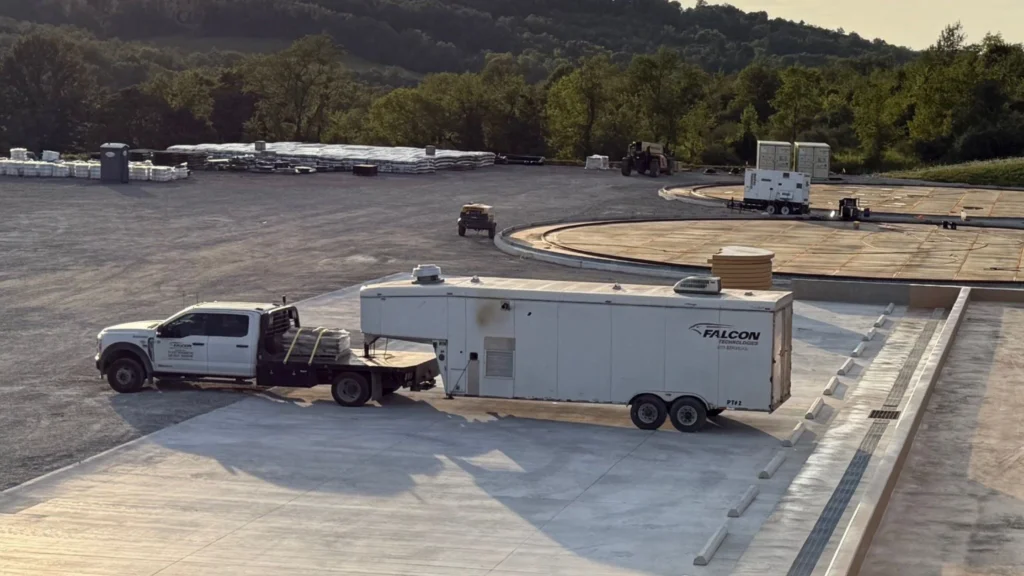
Falcon Technologies brings all of those capabilities to every AssetGuard project. The result is not just a product that has been placed in the ground or bolted to a surface. It is a containment solution that performs as designed, from day one through the full service life of the system.
When the question is whether your containment solution will actually contain, the answer begins with who installs it.
Frequently Asked Questions
What makes a containment solution fail after installation?
What makes a containment solution fail after installation?
Most post-installation failures trace back to substrate preparation shortfalls, improper joint sealing, or anchoring errors that are not immediately visible but create progressive structural compromise over time. Expert installation, with documented inspections at each phase, is the most reliable prevention.
How does site assessment affect containment system performance?
How does site assessment affect containment system performance?
Site assessment identifies substrate conditions, drainage patterns, environmental exposure factors, and access constraints that directly influence installation methods and material choices. Skipping or shortcutting site assessment is the most common cause of mismatched installation approaches.
Why does installation sequencing matter for containment systems?
Why does installation sequencing matter for containment systems?
Each installation phase creates the physical and chemical conditions required for the next phase to succeed. Out-of-sequence work, particularly in substrate preparation and joint treatment, leads to failures that are difficult to detect until a containment event reveals them.
Does installation quality affect containment system warranties?
Does installation quality affect containment system warranties?
Yes. Manufacturer warranties for containment products are generally conditioned on installation by qualified personnel in accordance with specified procedures. Installation deficiencies discovered after a containment event can void warranty coverage and transfer liability to the facility.
What documentation should a containment installation produce?
What documentation should a containment installation produce?
A properly documented installation should include pre-installation site assessment records, substrate preparation documentation, product lot and batch records, photographic documentation of key installation phases, and a post-installation inspection report with acceptance sign-off.
How does Falcon Technologies support long-term containment performance?
How does Falcon Technologies support long-term containment performance?
Falcon Technologies combines pre-installation site evaluation, structured installation sequencing, product-specific application expertise, and comprehensive field documentation to ensure AssetGuard systems perform to specification throughout their service life.